 BlueArch
AI coding agents burn tokens searching. Grep, re-grep, guess at the call graph, hallucinate a helper that doesn't exist. Two Rust projects worth watching this week take a different tack: parse the code once into a graph, then let the agent query structure instead of scrolling files.
CodeGraph
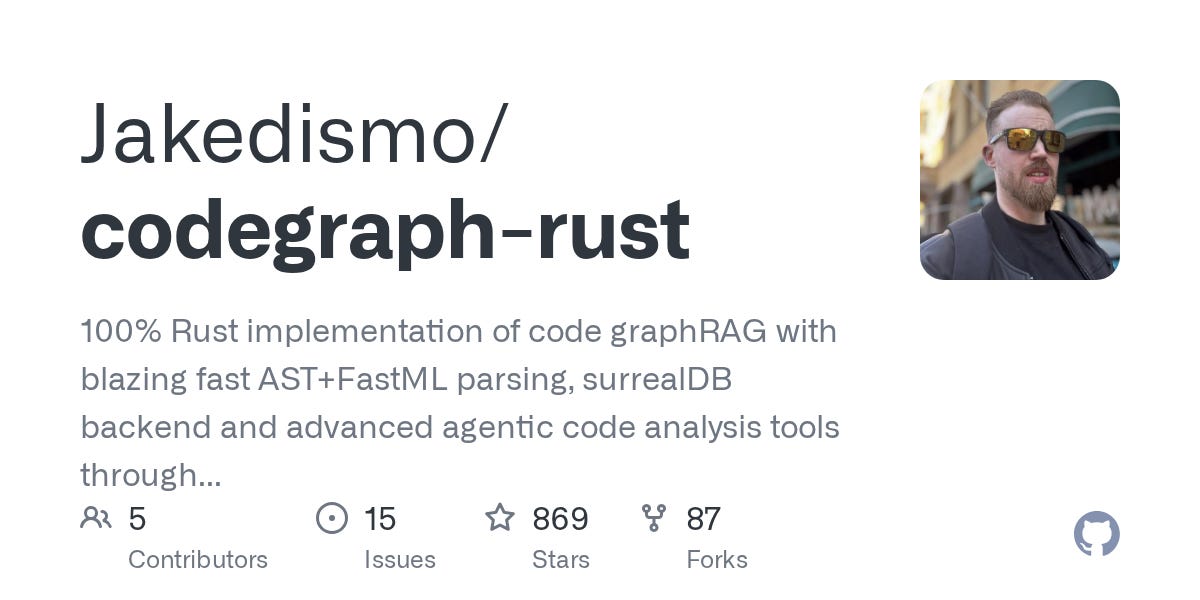
Summary. CodeGraph is a 100% Rust implementation of code GraphRAG — it turns a codebase into a semantically searchable knowledge graph so agents can reason about it instead of grepping through it.
Built and maintained by Jakedismo with contributions from jruokola.
AST + FastML parsing feeds a SurrealDB backend; agents query the graph over MCP.
Positioned as "advanced agentic code analysis tools" — call sites, relationships, architecture, not just text search.
Repo tagline: "Your codebase, understood." The problem it names is agents that grep instead of reason.
Use case. Give an AI assistant real structural context on a large repo without pushing the whole tree into context windows.
No direct FinOps mapping in the source material, but the cost angle is obvious once you look at agent bills.
Imagine a Claude Code or Cursor session that today re-reads twelve files per question to piece together a call graph. With CodeGraph fronting the repo over MCP, the agent could pull a scoped subgraph — the caller, the callees, the type — in one query.
Fewer speculative file reads means fewer input tokens. On a large monorepo where agents are already a line item, that compounds.
Imagine a governance workflow where you want an agent to answer "which services touch this IAM role?" without loading every Terraform file. A graph query returns the answer; grep returns a bill.
The install guide and usage guide are linked from the README — worth reading before pointing an agent at a 500k-LOC repo.
AgentGateway
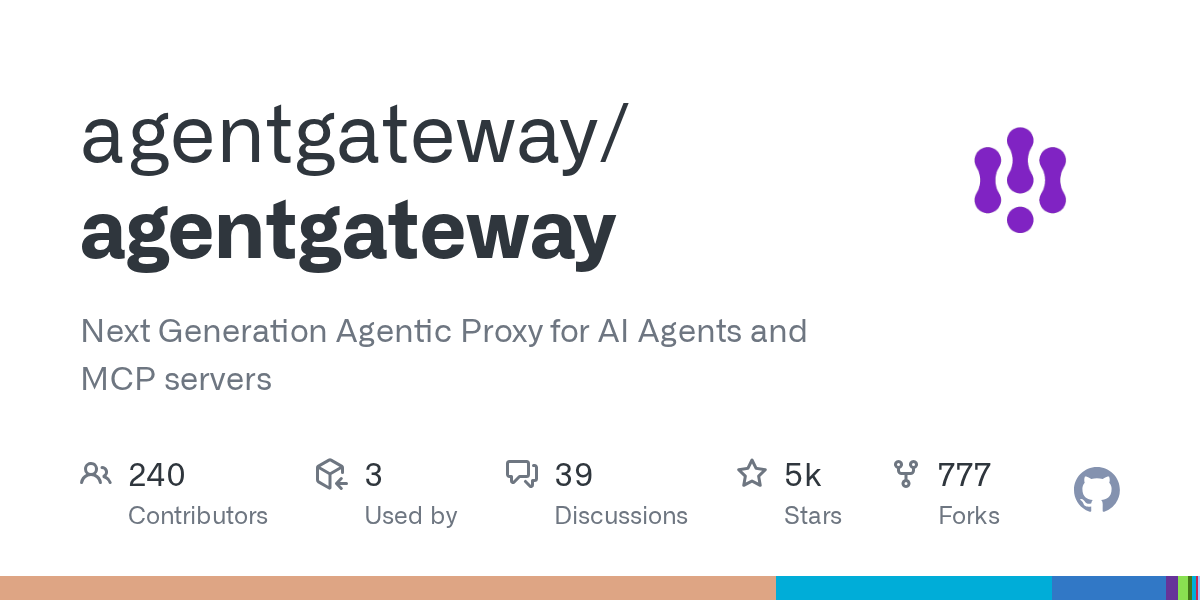
Summary. AgentGateway is a Rust-written agentic proxy framework that sits between AI agents and MCP servers, routing and coordinating traffic between them.
Organization on GitHub with four public repos; the flagship
agentgatewayrepo is the proxy itself.Described as "Next Generation Agentic Proxy for AI Agents and MCP servers."
Companion repos in the org cover community benchmarks and documentation.
Think of it as the L7 proxy layer for the MCP era — the piece that terminates agent-to-tool connections, applies policy, and forwards.
Use case. Central control point when you have more than one agent talking to more than one MCP server.
No FinOps numbers in the material, but the shape of the problem is familiar to anyone who has run an API gateway.
Imagine ten dev teams each wiring their own Claude/Cursor/Copilot instance directly to a dozen MCP servers — code search, ticketing, cloud APIs, a CodeGraph instance per repo. Nobody knows who called what, or how often.
With AgentGateway in front, you could route those calls through one proxy, tag them by team, and finally attribute agent-driven API cost.
Imagine a policy that blocks agent traffic to a paid MCP server after N calls per hour per team. Standard rate-limiting, applied to the layer that is currently the wild west.
Benchmarks in the org's community repo are the right place to look before putting it on a hot path.
Why these two together
The pairing matters more than either project alone.
CodeGraph gives the agent a map of one repository.
AgentGateway gives the platform team a checkpoint across every agent-to-tool connection.
Both are Rust, both target the MCP substrate that Anthropic, Cursor, and the rest are converging on.
Both replace an implicit, unmetered pattern (agents grepping; agents fan-out to random MCP endpoints) with something you can observe.
If your FinOps practice hasn't started tracking agentic coding spend yet, it will. The teams that instrument early get to answer "which repo, which team, which agent?" when the invoice lands. The teams that don't will be staring at a lump-sum LLM bill.
One decision this week
Point one AI assistant at CodeGraph on a single mid-sized repo and compare token usage against your current grep-based setup for the same five questions. If the delta is real, the case for graph-backed context writes itself — and if the tool saved you real money, sponsor Jakedismo so the Rust side of agentic tooling keeps shipping.